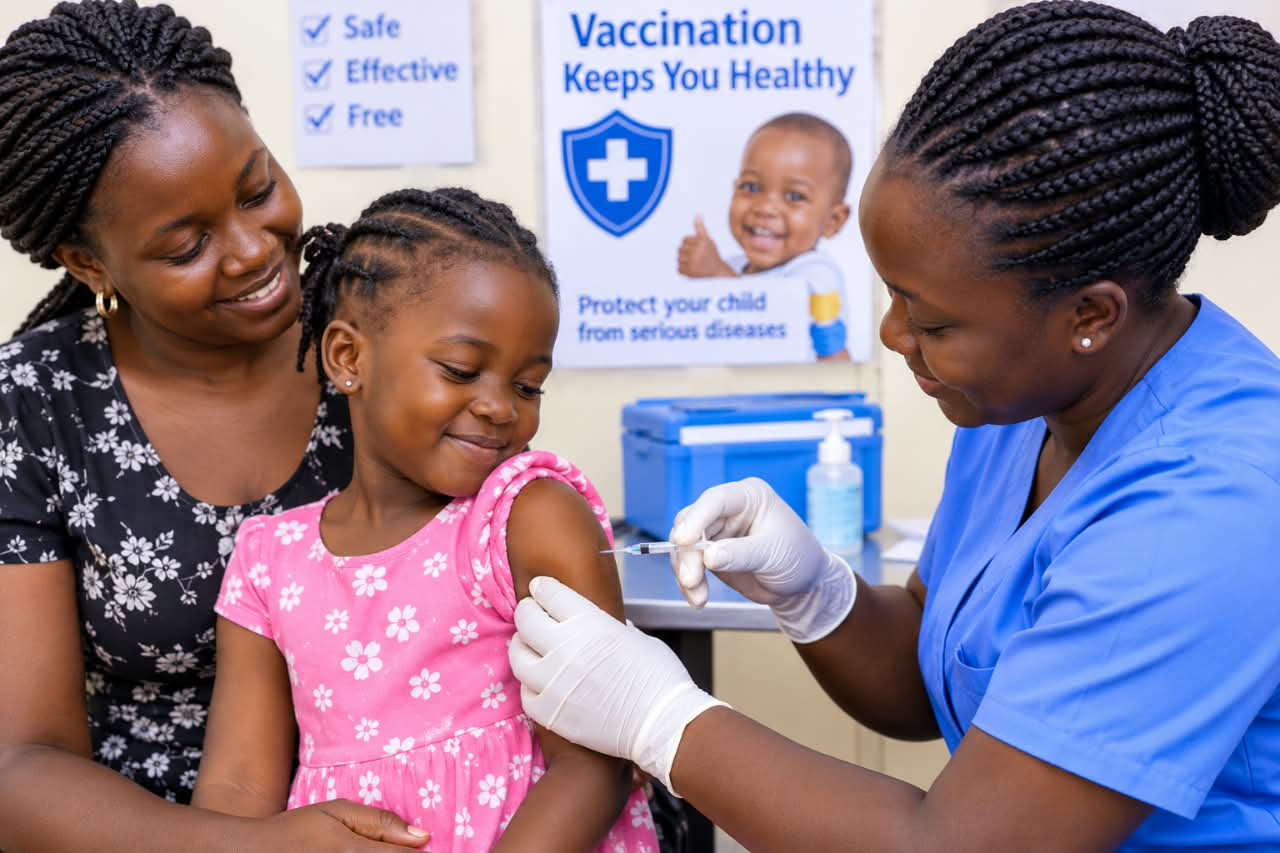
Vaccines are an important part of family and public health, vaccination is one of the most effective ways to protect yourself and your loved ones against preventable diseases. From infancy to adulthood, vaccines play a vital role in building immunity, preventing serious illnesses and promoting a healthier future.
At City Medicals, we are committed to keeping you and your family protected through reliable vaccination services delivered by our well- trained healthcare professionals. Whether you are protecting your little one, preparing for travel or safeguarding your health as an adult, we are here to help you make informed decisions about your well-being.
Here are the vaccination services available at City Medicals:
Yellow Fever:
- What it is: Yellow fever is a serious viral disease transmitted through the bites of infected mosquitoes. It can cause fever, headache, muscle pain, jaundice (yellowing of eyes), and in severe cases organ failure or death.
- How the vaccine is given: A single 0.5ml shot given under the skin (subcutaneous). One dose gives lifelong protection.
- Who needs it: Everyone living in or traveling to high-risk areas, such as tropical Sub-Saharan Africa and South America. (Starting from 9 months of age to 55 years of age)
(Td / Tdap) Tetanus/ Diphtheria/Pertussis (Whooping cough).
- What they are: It is a combination vaccine that protects against three serious life-threatening bacterial infections. Tetanus is caused by bacteria in dirt or rusty metal entering wounds, causing severe jaw stiffness (‘lockjaw’) and painful muscle spasms. Diphtheria is a highly contagious bacterial throat infection that forms a thick grey membrane, blocking airways and damaging the heart and nerves. Whooping cough is a highly contagious respiratory infection that causes severe coughing.
- How the vaccine is given: A shot into the muscle (intramuscular). Given as a series during childhood. It is given as a 3dose schedule (1stdose at 2 months, 2nd dose at 4 months and 3rd dose at 6 months) A booster dose is given at 12 to 15 months.
- Who needs it: All age groups mainly infants and young children face the highest risk. Adults who sustain potentially contaminated wounds may require a Tetanus Toxoid (TT) vaccine to boost their immunity and reduce the risk of developing Tetanus.
Injectable polio (IPV)
- What it is: A viral infection affecting the central nervous system that can lead to permanent paralysis, and death in severe cases.
- How the vaccine is given: A shot into the thigh of infants, or the upper arm of older children and adults.
- Who needs it: Mainly infants and young children under 5 years old as part of routine childhood immunizations. Unvaccinated adults traveling to areas with active polio outbreaks also require protection.
Hepatitis A & Hepatitis B.
- What are they: Hepatitis A & Hepatitis B vaccines protect against viral infections that affect the liver. Hepatitis A is an acute liver infection spread through contaminated food or water, and can cause fever, nausea, abdominal discomfort, fatigue and jaundice. Hepatitis B is transmitted through infected blood and body fluids and can lead to chronic liver disease, cirrhosis and liver cancer.
- How the vaccine is given: A shot into the muscle (intramuscular injections), usually into the upper arm for adults and the thigh for infants. Hepatitis A involves 2 shots given 6 months apart. Hepatitis B involves 3 shots in infants (at birth, 1–2 months, and 6–18 months), while in adults a commonly used three-dose schedule (0,1 and 6 months) A combination Hep A&B vaccine is also available.
- Who needs it: Children and adults ,especially those with poor immune systems.
Typhoid (oral or injectable)
- What it is: A severe bacterial infection caused by salmonella Typhi. The disease is spread through dirty food and water, causing high fever, stomach pain, weakness and digestive complications.
- How the vaccine is given: Available either as a single injectable shot (for ages 6 months and older) or as 4 oral capsules taken every other day (for ages 6 years and older).
- Who needs it: Children, young adults, food handlers and travelers visiting areas where typhoid is common.
Traveler’s Diarrhea/ Cholera.
- What it is: Bacterial gastrointestinal infections caused by Vibrio Cholerae. Cholera is transmitted through contaminated food and water and can cause severe rapid watery diarrhea and vomiting leading to dangerous dehydration which may become life threatening without prompt treatment.
- How the vaccine is given: Taken orally as a liquid solution (1 to 3 doses depending on the specific vaccine). Some oral cholera vaccines also provide protection against certain types of E.coli bacteria that cause diarrhea.
- Who needs it: Travelers visiting high-risk areas, individuals living in places experiencing an active outbreak, and food handlers.
Meningococcal Meningitis.
- What it is: A dangerous bacterial infection caused by Neisseria meningitidis, that infects the thin membranes (meninges) that surround the brain and spinal cord, which can quickly lead to severe blood infection (Septice
- mia) or permanent neurological injury.
- How the vaccine is given: A shot into the muscle (Intramuscular injection).
- Who needs it: Infants, pre-teens/teens (routine dose at 11–12 years with a booster at 16 years), people living in crowded places such as students living in dorms, and adults traveling to high-risk areas.
Influenza (Flu)
- What it is: A common contagious respiratory virus causing sudden fever, body aches, cough, severe fatigue, and in severe cases potential lung complications such as pneumonia.
- How the vaccine is given: An annual shot into the muscle or a nasal spray formulation.
- Who needs it: Everyone 6 months of age and older, every year. High-priority groups include adults 65+, pregnant women, people visiting endemic areas, young children under 5, and individuals with underlying medical conditions.
Measles /Mumps/Rubella (MMR)
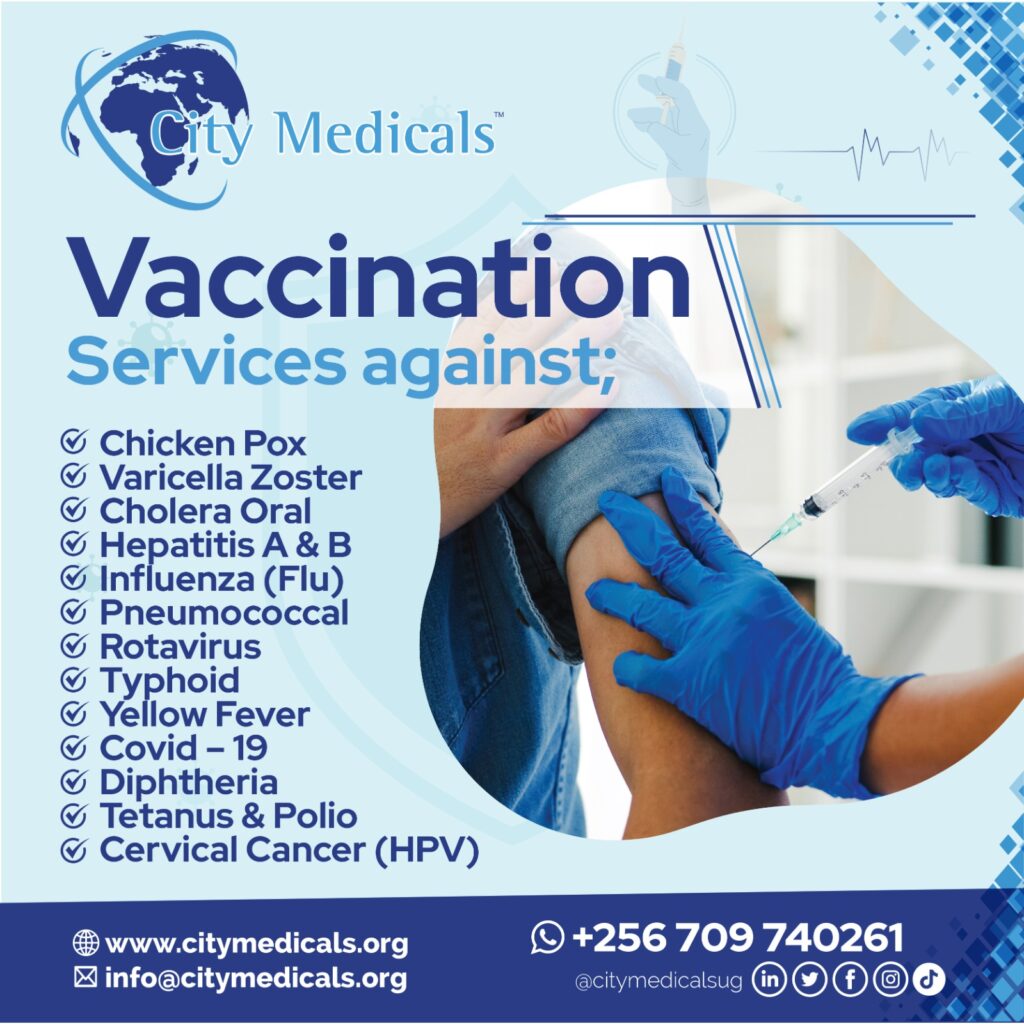
The MMR vaccine protects against three viral infections.
- What they are: Measles brings high fever, rash, runny nose, red eyes and severe cough with risks of brain/lung infection. Mumps causes painful swelling of the salivary glands, particularly near the cheek and jaw, and may sometimes lead to meningitis or inflammation of the testicles (orchitis) particularly in males. Rubella also known as German measles is mild in children but causes severe birth defects if contracted during pregnancy.
- How the vaccine is given: The MMR vaccine is a live-attenuated vaccine. It is a 2-dose series given as shots under the skin. Given in the thigh for infants, and the upper arm for adults.
- Who needs it: Unimmunized adolescents or adults without documented immunity. Infants measles 2-dose schedule goes as;1st at 9months, 2nd at 18 months.
Pneumococcal for infants and adults.
- What it is: A bacterial infection caused by Streptococcus pneumoniae, causing pneumonia, severe blood infections (bacteremia/sepsis), and bacterial meningitis.
- How the vaccine is given: A shot into the muscle (intramuscular injection).
- Who needs it: Infants and toddlers (routine multi-dose series starting at 2 months) and adults 65 and older, or adults with chronic heart, lung, or weak immune conditions.
Rabies Vaccination.
- What it is: A deadly virus transmitted through the saliva of an infected animal via bites or scratches. Rabies affects the nervous system and can cause fever, headache, itching of the wound, paralysis and once clinical symptoms appear, it is nearly 100% fatal.
- How the vaccine is given: Shots into the muscle(intramuscular). Preventative (pre-exposure) usually given across 3 doses within a 1month period. Unvaccinated individuals (post-exposure): typically receive a 4-dose series on days 0,3,7 and 14 (alongside rabies immune globulin (HRIG) given on day 0). Immune compromised individuals those are individuals with a weakened immune system that cannot fight viruses, bacteria and fungi as effectively as a healthy body can, may require a 5th dose on day 28. Previously vaccinated individuals (post-exposure) receive 2 booster doses given on days 0 and 3 (no HRIG needed.
- Who needs it: Anyone bitten or scratched by a potentially rabid animal (children face high incidence due to frequent interaction with animals) or high-risk workers such as security guards.
Varicella Vaccine (Chickenpox)
- What it is: Chickenpox is a highly contagious viral infection caused by the varicella-zoster virus. It causes an itchy skin rash that develops into fluid-filled blisters, accompanied by fever, tiredness and general body discomfort.
- How the vaccine is given: It is a 2 dose shot, given as an injection under the skin. Children: 1st dose at 12-15 months, second dose at 4-6 years. Adults and older children 2 doses usually 4-8 weeks apart, if they have no previous immunity.
- Who needs it: Everyone especially at the childhood stage.
HPV Vaccine (Human Papillomavirus)
- What it is: The HPV vaccine protects against certain types of human papillomavirus, a common virus mainly transmitted through intimate skin-to-skin and sexual contact. Some types of HPV can cause genital warts, while others can lead to cancer, particularly cervical cancer in women. The vaccine helps the body develop immunity against these high-risk HPV types (such as types 16 and 18) reducing the risk of developing HPV related cancers, and types (6 and 119 that cause genital warts.
- How the Vaccine is given: It is given as an injection into the upper arm muscle (intramuscular injection). The number of doses depends on the person’s age, immune status and the vaccination schedule recommended by the Ministry Of Health.
Who needs it: Mainly for females. Recommended for preteens ages 11 to 12, though can be started as early as age 9, teens and young adults through age 26 if they did not get vaccinated earlier.
By staying up to date with the recommended vaccines, we take an important step towards healthier lives and a safer future. At City Medicals, we are ready to guide and support you with reliable vaccination services. Visit any of our branches in Kololo, Buliisa or Hoima. For appointments and inquiries, call Us on 0200906345, WhatsApp: 0709740261 or visit the website: www.citymedicals.org.
Let’s take the first step towards a healthier future together. Your protection begins with prevention!